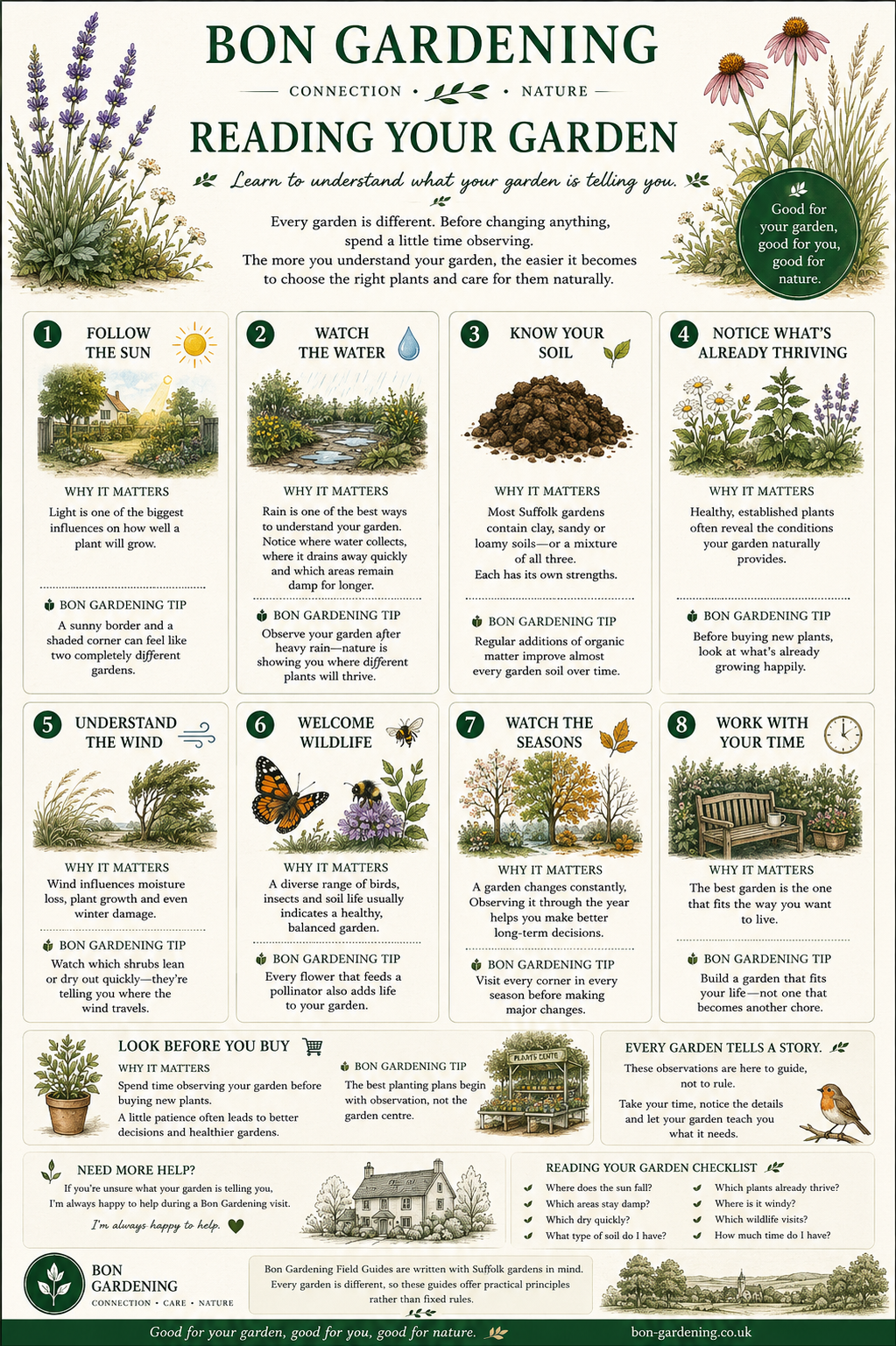
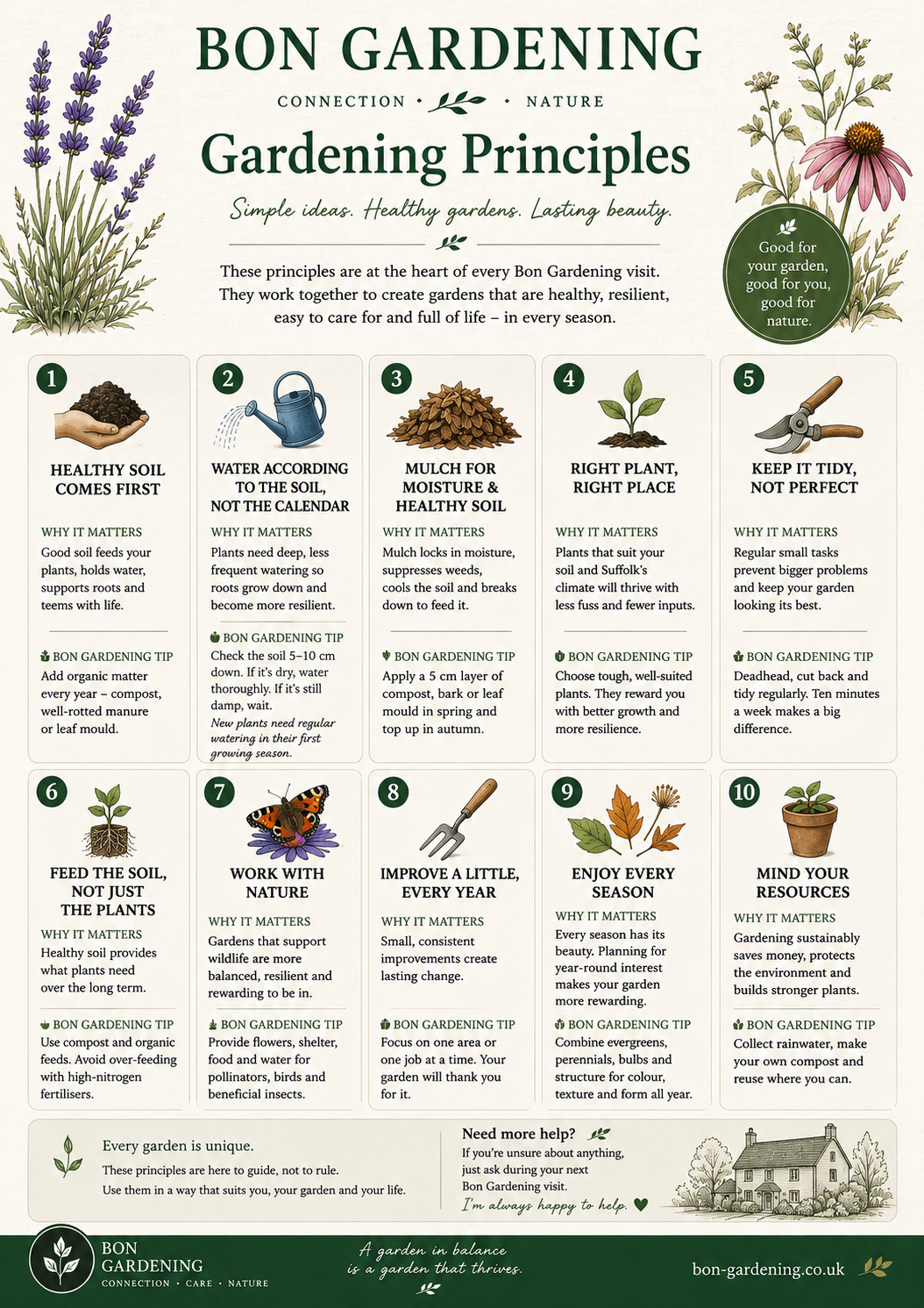
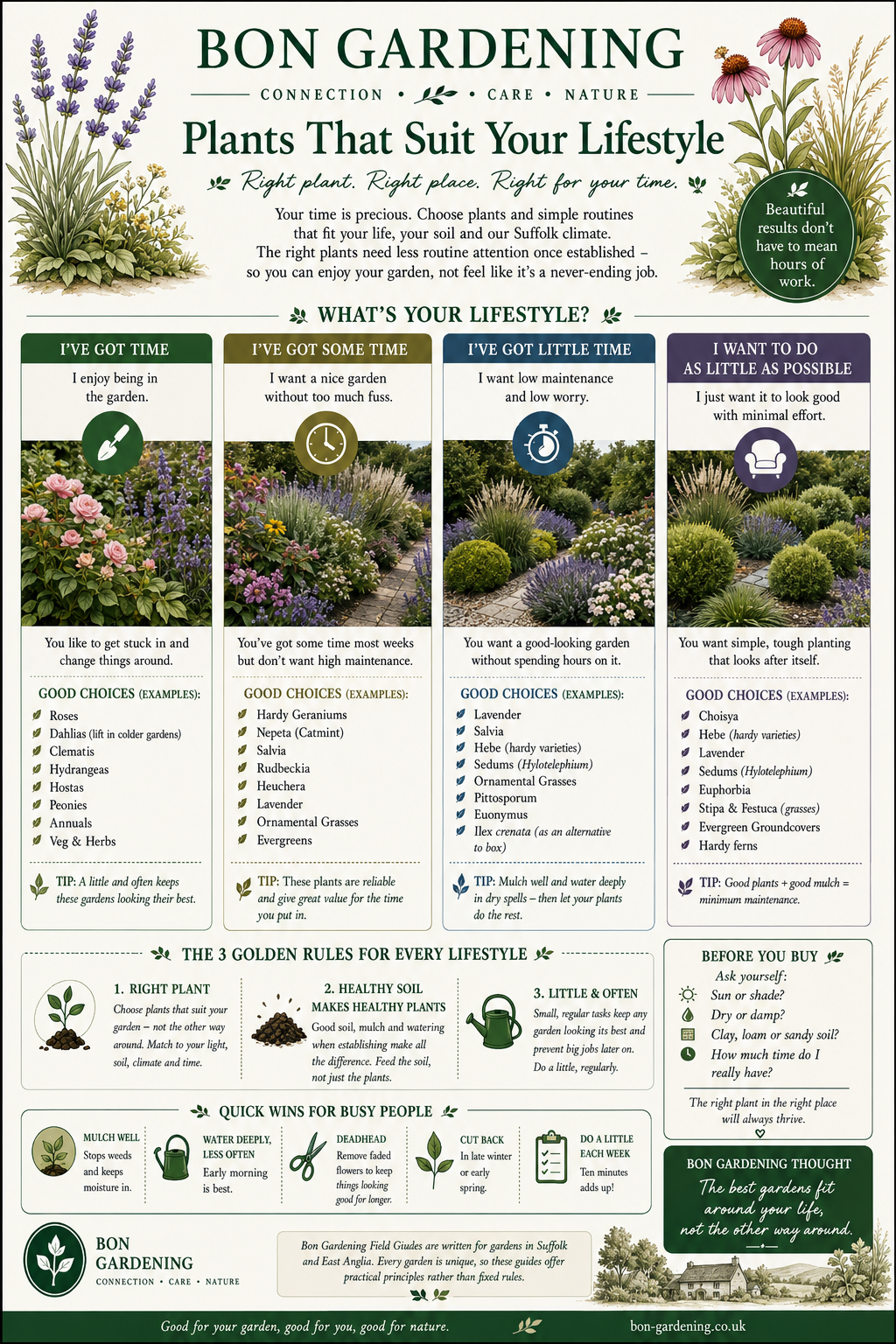
Field Guide No. 06
The Suffolk Cottage Garden
Romantic, relaxed and full of life — a timeless style for Suffolk gardens
Cottage gardens are abundant, informal and ever-changing. They blend beauty and purpose, providing food for pollinators and joy through the seasons. This guide sets out the plants, partnerships and rhythms that make the style work on Suffolk's light, free-draining soils.
A quiet read — around 9 minutes.
Why it matters
A cottage garden earns its keep. Beauty first, but never only beauty.
- Provides nectar and pollen for bees, butterflies and other beneficial insects across a long season.
- Supports birds with seeds, shelter and insect food, particularly where seed heads are left standing.
- A diverse mix of plants creates a resilient, low-input garden — no single pest or disease can take it all.
- Beautiful, calming spaces improve wellbeing. Old-fashioned in style, perfectly modern in benefit.
In Suffolk
Much of Suffolk sits on light, free-draining sandy loam over chalk or clay, with among the lowest annual rainfall in the UK. That combination suits a great many cottage garden plants — roses, nepeta, salvia, achillea and alliums all resent winter wet more than summer drought.
The trade-off is that moisture-lovers such as phlox, astrantia and delphiniums need help: plant them in the more retentive parts of the garden, improve those beds with compost each year and mulch to 5 cm.
Coastal and exposed inland gardens carry drying easterly wind. A hedge, fence or informal shrub backbone shelters tender perennials and stops tall stems snapping in June storms.
The cottage garden calendar
Colour and life from spring to late autumn.
Spring — March to May
Primroses, aquilegia, honesty, tulips, forget-me-not and early hardy geraniums. Bulbs planted the previous autumn carry the garden while perennials are still low.
TipLeave honesty and forget-me-not to self-seed, then edit hard in June — free plants, none of the cost.
Early summer — May to July
Peonies, roses, foxgloves, campanula, nepeta and lady's mantle. The richest moment of the year, and the one most worth planning for.
TipUnderplant roses with Nepeta 'Six Hills Giant' — it hides bare stems, feeds bees and shrugs off dry Suffolk summers.
Summer — June to August
Phlox paniculata, Shasta daisy, sweet peas, lavender, salvia and achillea. Deadhead little and often to keep the display running.
TipSweet peas want moisture at the root — a deep, well-composted trench pays for itself in July.
Late summer — August to September
Rudbeckia, echinacea, verbena, sedum (Hylotelephium) and later salvias. These carry the garden through the moment when early perennials have finished.
TipPlant late performers in among June flowerers so the border never has a bare patch.
Autumn — September to October
Asters (Symphyotrichum), helenium, anemones and ornamental grasses. Seed heads and low light do most of the work.
TipLeave stems standing until late winter — structure for you, shelter for overwintering insects.
Plants and partners
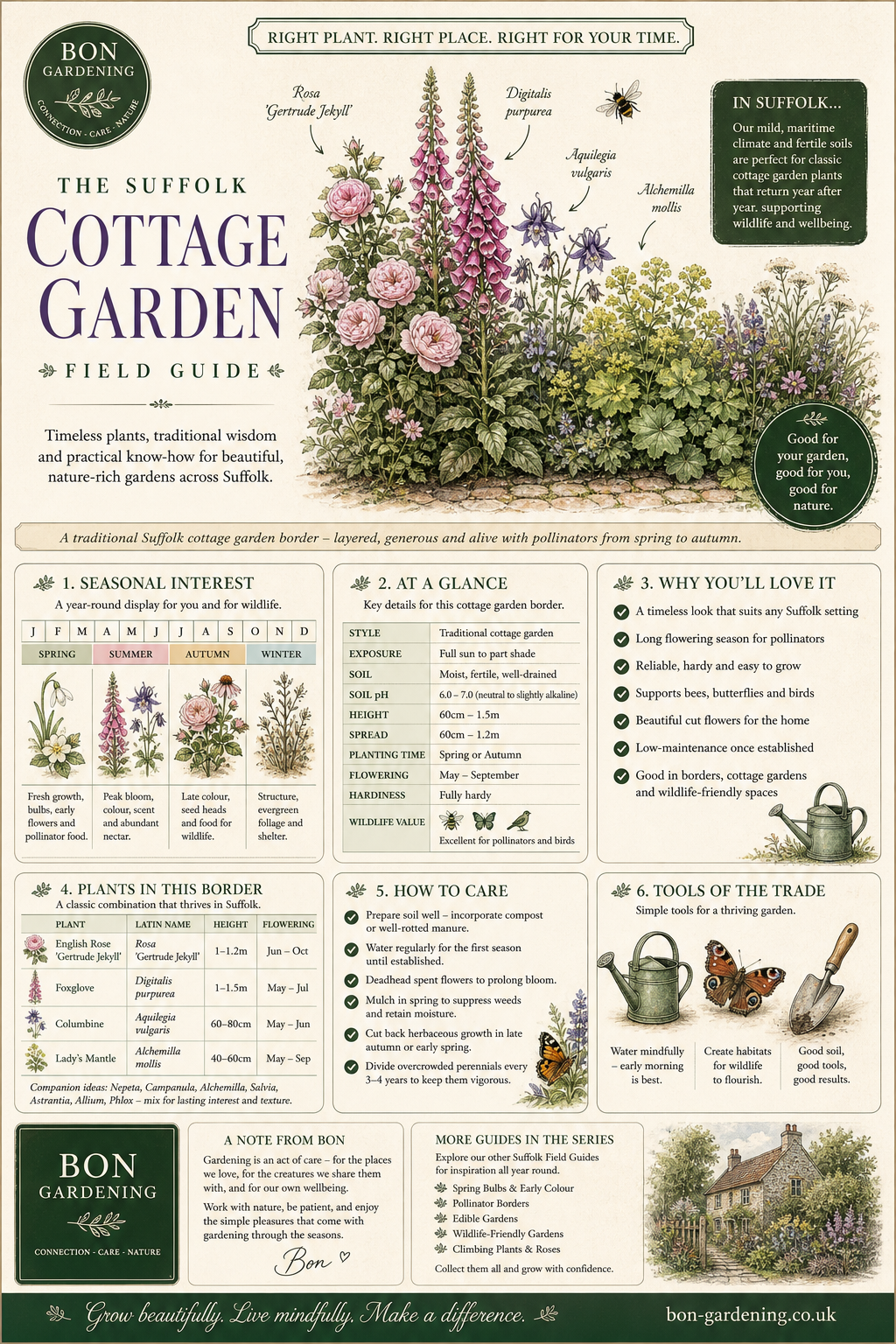
A dependable cottage garden mix, with flowering windows for East Anglia.
Rosa 'Gertrude Jekyll' (Rose)
Flowers June to October in flushes. Strong old-rose scent, tolerant of light soils if fed and mulched.
TipGood partners: Lavandula, Nepeta, Alchemilla, Geranium 'Rozanne'.
Digitalis purpurea (Foxglove)
Flowers June to July. Biennial — sow or allow to self-seed one year for flowers the next. Happy in part shade.
TipGood partners: roses, geraniums, campanula, ferns at the shady end of a border.
Alchemilla mollis (Lady's mantle)
Flowers May to July. Froths over path edges and holds rain in its leaves. Cut to the ground after flowering for fresh foliage.
TipGood partners: roses, peonies, salvia. Shear before it seeds everywhere.
Lavandula angustifolia (Lavender)
Flowers June to August. Ideally suited to Suffolk's free-draining soils and full sun. English types are far hardier than French.
TipTrim after flowering into green growth, never into old wood.
Echinacea purpurea (Coneflower)
Flowers July to September. Needs sun and drainage; sulks in cold, wet ground over winter.
TipGood partners: rudbeckia, salvia, ornamental grasses.
Aquilegia vulgaris (Columbine)
Flowers May to June. Self-seeds and hybridises freely — an old cottage garden habit worth allowing.
TipCut back after flowering to reduce mildew and encourage clean new foliage.
How to create a cottage garden
- Choose a mix of perennials, annuals and bulbs so something is always coming into flower.
- Plant in informal drifts and natural groupings — odd numbers of three, five or seven.
- Repeat the same plant along the border to give rhythm and hold the abundance together.
- Use a variety of heights and flower shapes: spires, umbels, daisies and froth.
- Include plants for pollinators and wildlife in every season, including early spring and late autumn.
- Let some plants self-seed for the future — then edit with confidence in early summer.
Quick notes
- Feed the soil, not just the plant — an annual mulch of compost does more than any bottle.
- Deadhead often; it is better than big and rare.
- Nature does the digging — worms and roots. Disturb the soil as little as you can.
- Healthy soil retains moisture, which matters more here than almost anywhere in England.
- Support tall perennials in May, before they need it. Staking after a storm never looks right.
Did you know?
The cottage garden as we know it is largely a 19th-century idea — a romantic reinterpretation of genuine country working gardens, where flowers, herbs, fruit and vegetables shared the same ground out of necessity rather than style.
Writers and designers including William Robinson and Gertrude Jekyll turned that practicality into a deliberate aesthetic. The rose named for Jekyll remains one of the most reliable scented English roses for a Suffolk border.
Repeat plants in drifts for impact and ease. Relax the rules and enjoy the abundance — a cottage garden is meant to feel lived in.
Bon Gardening Field Guides are written with Suffolk gardens in mind. Every garden is different, so these guides offer practical principles rather than fixed rules.