Field Guide No. 01
Reading Your Garden
Learn to understand what your garden is telling you
Every garden is different. Before changing anything, spend a little time observing. The more you understand your garden, the easier it becomes to choose the right plants and care for them naturally.
A quiet read — around 6 minutes.
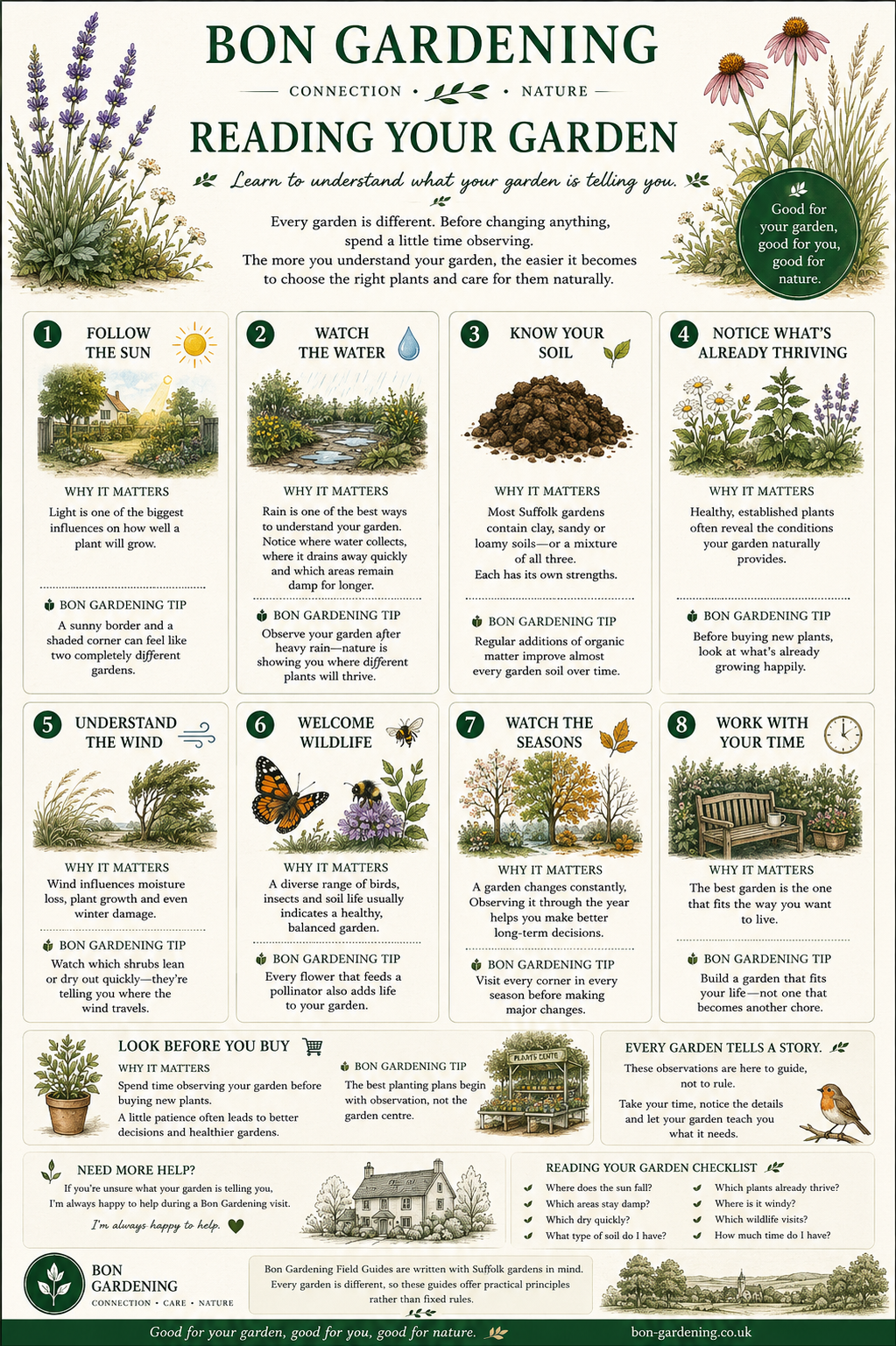
Eight things to notice
Follow the sun
Light is one of the biggest influences on how well a plant will grow.
TipA sunny border and a shaded corner can feel like two completely different gardens.
Watch the water
Rain is one of the best ways to understand your garden. Notice where water collects, where it drains away quickly and which areas remain damp for longer.
TipObserve your garden after heavy rain — nature is showing you where different plants will thrive.
Know your soil
Most Suffolk gardens contain clay, sandy or loamy soils — or a mixture of all three. Each has its own strengths.
TipRegular additions of organic matter improve almost every garden soil over time.
Notice what's already thriving
Healthy, established plants often reveal the conditions your garden naturally provides.
TipBefore buying new plants, look at what's already growing happily.
Understand the wind
Wind influences moisture loss, plant growth and even winter damage.
TipWatch which shrubs lean or dry out quickly — they're telling you where the wind travels.
Welcome wildlife
A diverse range of birds, insects and soil life usually indicates a healthy, balanced garden.
TipEvery flower that feeds a pollinator also adds life to your garden.
Watch the seasons
A garden changes constantly. Observing it through the year helps you make better long-term decisions.
TipVisit every corner in every season before making major changes.
Work with your time
The best garden is the one that fits the way you want to live.
TipBuild a garden that fits your life — not one that becomes another chore.
A checklist for reading your garden
- Where does the sun fall?
- Which areas stay damp?
- Which dry quickly?
- What type of soil do I have?
- Which plants already thrive?
- Where is it windy?
- Which wildlife visits?
- How much time do I have?
These observations are here to guide, not to rule. Take your time, notice the details and let your garden teach you what it needs.
Bon Gardening Field Guides are written with Suffolk gardens in mind. Every garden is different, so these guides offer practical principles rather than fixed rules.