A long read from Bon Gardening
Gardening & Wellbeing
On green space, scent, birdsong and the quiet satisfaction of tending something living — and what careful research suggests about why gardens settle us.
Most people who garden already know that it does them good. They may not use those words. They notice instead that an hour spent weeding leaves them steadier than an hour spent almost anywhere else, and that a garden asks something of them which is easy to give.
What follows is not medical advice, and nothing here is a treatment. It is a considered summary of what good research suggests about the relationship between gardens, time in nature and psychological wellbeing — written slowly, and best read the same way. Take twenty minutes. There is no hurry in any of it.
Roughly a twenty minute read
One
Why we are drawn to green
Give someone a hospital window and a choice of view, and they will almost always choose the trees. Give them a bench in a car park or a bench under a hedge, and they will walk the extra distance to the hedge. This preference is so ordinary that we rarely examine it, yet it appears again and again, across cultures and across ages.
The biologist E. O. Wilson gave the tendency a name in 1984: biophilia, the proposition that human beings hold an inherited affiliation with other living things and with the landscapes that support them. It is a hypothesis rather than a settled law, and honest researchers still argue about how much of the pull is inherited and how much is learned. But the pull itself is not really in dispute.
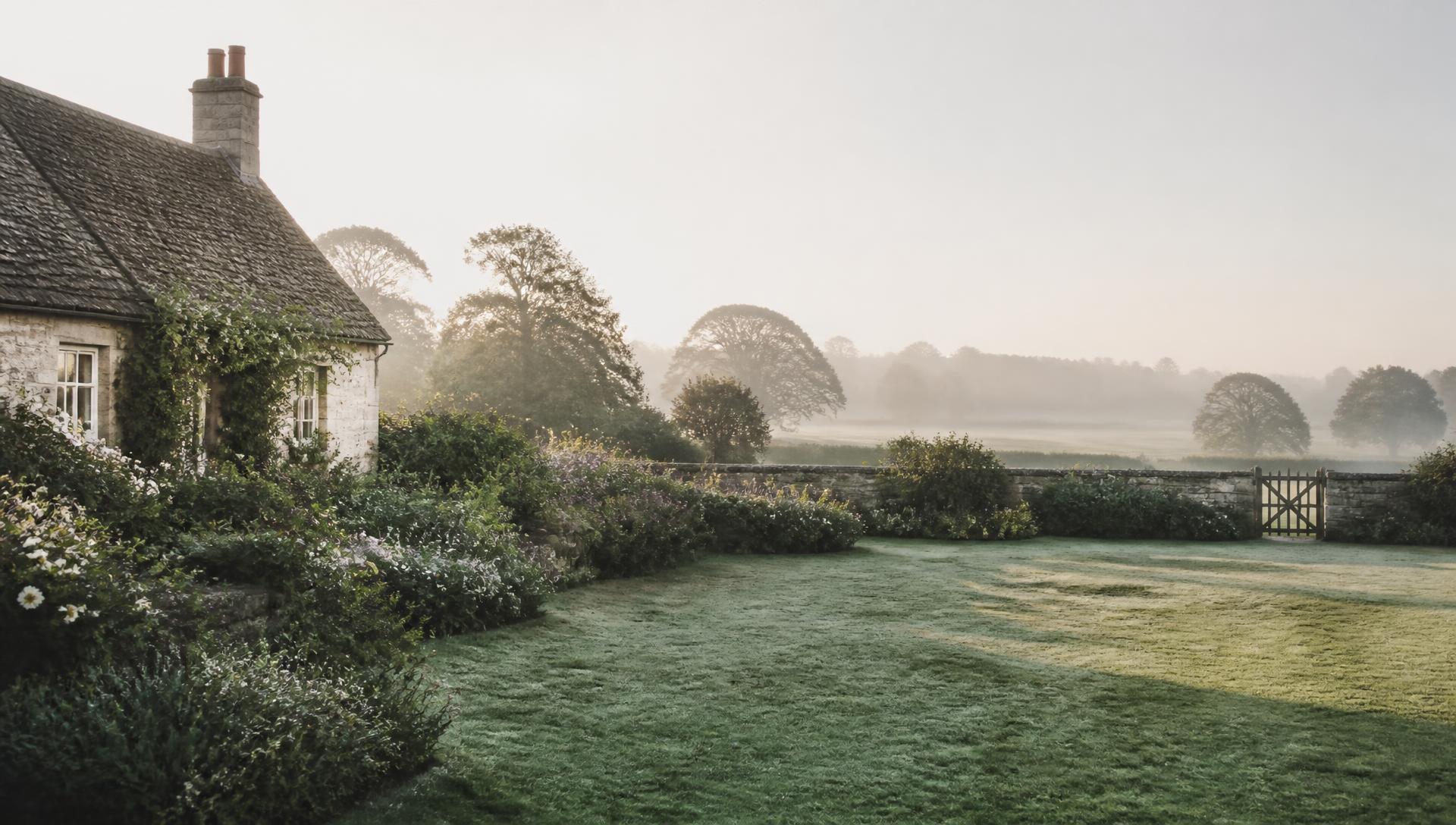
Landscape studies suggest we favour a particular arrangement: scattered trees, some open ground, water in view, a sense of shelter with a prospect beyond it. It is, more or less, the shape of an English garden with a lawn, a border and a gate at the end. We build the thing we like to look at.
Two
The psychology of a restorative place
The most useful explanation of why gardens feel restful comes from the environmental psychologists Rachel and Stephen Kaplan. Their Attention Restoration Theory distinguishes two kinds of attention. Directed attention is the effortful kind: reading a contract, driving in traffic, holding a difficult conversation. It is finite, and it tires.
Natural settings, they argued, engage a second kind — soft fascination. A garden holds the eye without demanding it. Light moves across a border, a bee works a flower spike, a leaf turns over. There is enough to notice that the mind does not go looking for stimulation, and little enough that it never has to concentrate. Meanwhile the tired, effortful faculty is allowed to refill.
The Kaplans described four qualities a restorative place tends to have: a sense of being away, enough extent to feel like a world of its own, soft fascination, and compatibility between the place and what you want to do there. A small back garden can hold all four. Size is not the variable that matters.
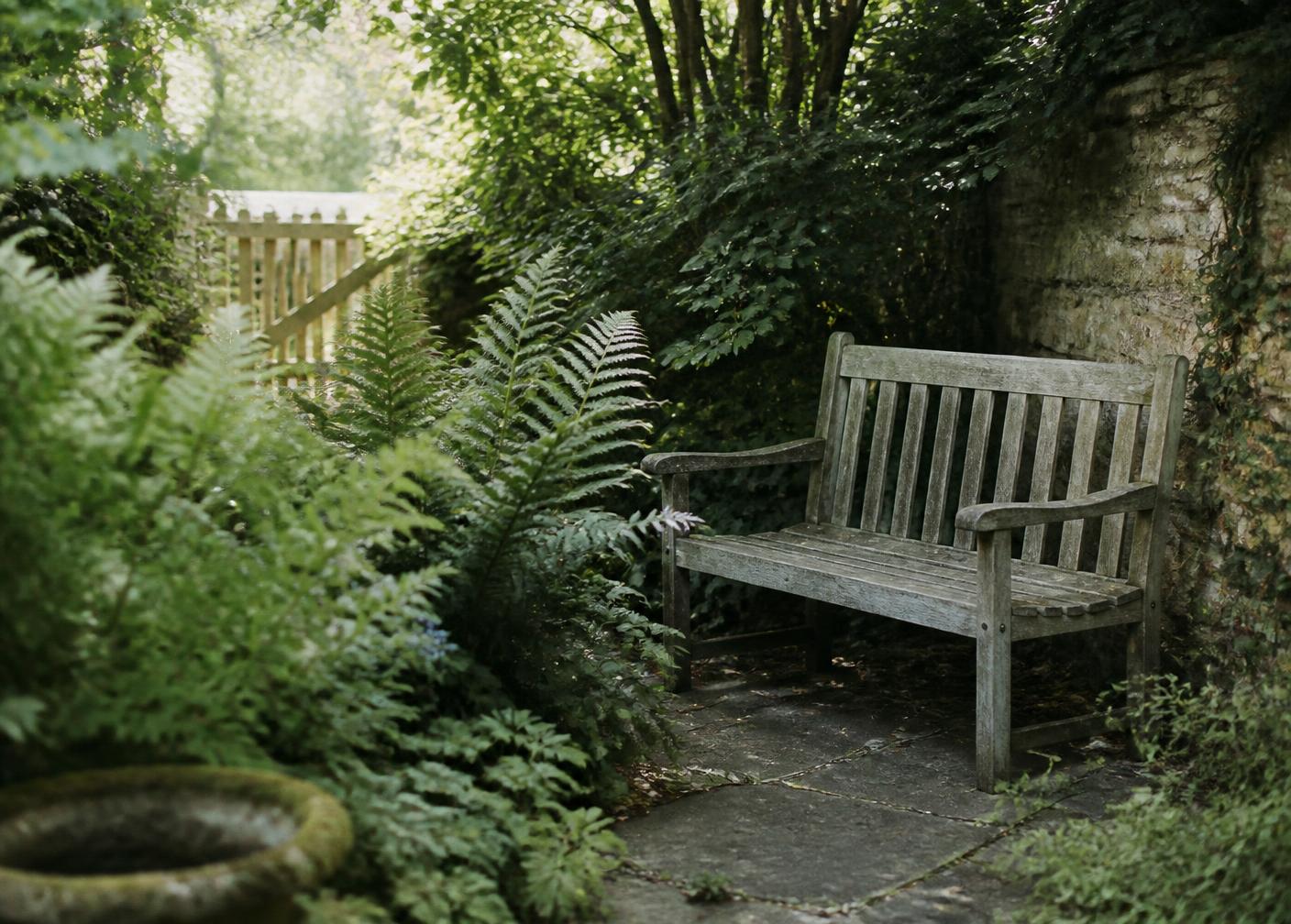
“A garden does not ask you to concentrate. It only asks you to notice.”
Three
Flowers, colour and the turning year
Flowers are strange things to spend money on. They are not useful, they do not last, and every culture keeps buying them anyway. Studies of flowers and mood consistently report short-term improvements in reported emotional state — usually modest, usually brief, and worth treating with the caution that self-report deserves. But the finding is stubbornly repeatable, and it accords with what everyone already does when someone is unwell.
Colour in a garden works differently from colour on a screen. It is never flat. A green border at seven in the morning and the same border at six in the evening are two different pieces of work, and the change happens whether or not anyone is watching. Gardeners learn to read this, and the reading itself is absorbing.
Then there is seasonal change, which a garden delivers reliably and almost nothing else in modern life does. Snowdrops in February, hellebores just behind them, the shock of the first proper green in April, the long tired richness of September. A garden gives the year a shape. For many people that shape is quietly steadying, particularly in the darker months when the calendar offers little else.
Pause here
Look up from this page for a moment. Find the nearest living green thing — a tree through a window, a plant on a sill — and give it thirty seconds of attention. Notice what the light is doing to it today.
Four
Fragrance, memory and the back door
Smell is the oldest of the senses and the least tidy. Olfactory signals reach the amygdala and hippocampus — regions closely involved in emotion and memory — by a notably direct route, which is why a scent can return a whole afternoon of childhood before you have named what you are smelling. Researchers call these odour-evoked autobiographical memories, and they tend to be older, more emotional and less rehearsed than memories triggered by words or pictures.
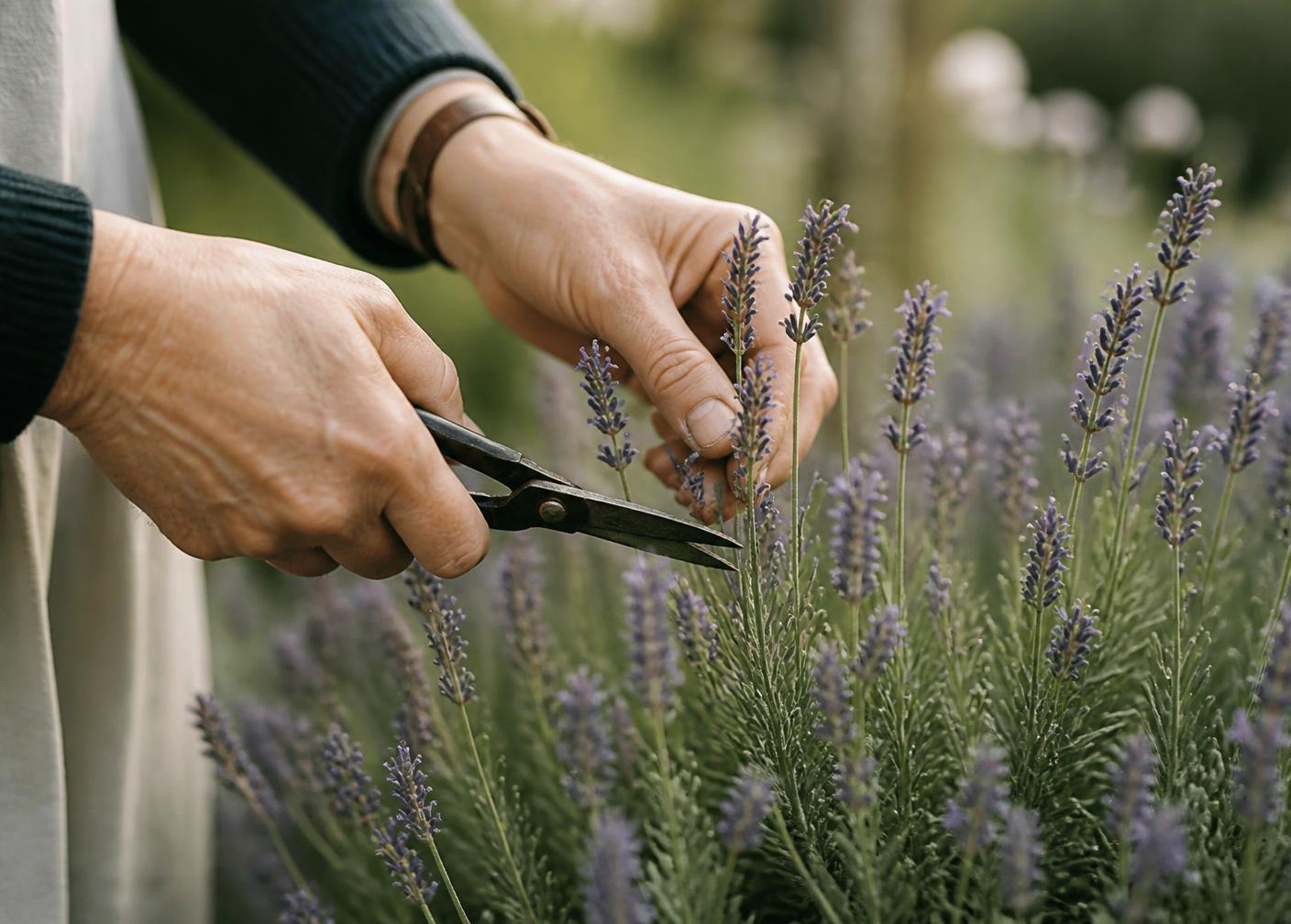
This has practical consequences for a garden. Scented plants placed where people actually walk — beside the back door, along the path to the shed, at the edge of a seat — do more work than the same plants placed handsomely in the middle of a border. Lavender and rosemary release their oils when brushed, so they belong at knee height beside a path. Roses and honeysuckle are strongest in still evening air, so plant them where you sit. Sarcococca in January will stop a visitor in their tracks and they will not be able to tell you why.
A word of balance: lavender is frequently described as calming, and there is some experimental support for effects on relaxation and sleep. The evidence is mixed in quality, and it is not a treatment for anything. It is a good plant that smells wonderful when you knock against it in June, which is reason enough to grow it.
Five
The sound of a garden
Sound is the part of a garden most often designed by accident. Yet natural sound has been studied more carefully than most people realise. Reviews of the field have found that natural soundscapes — birdsong, water, wind in leaves — are associated with improvements in mood and reductions in stress and reported annoyance, while traffic and mechanical noise pull in the other direction.
Birdsong in particular seems to carry meaning beyond pleasantness. Several studies have found associations between hearing birdsong and improved mood, including in people experiencing low mood. One plausible explanation is that birdsong is a reliable signal of safety: a wood full of singing is a wood without a threat in it. The dawn chorus is the loudest reassurance available in England, and it is free.
Water works differently. Moving water produces broadband sound that masks intermittent noise — the sound of a car, a distant mower, a gate — and removes the small startles that keep a body alert. A modest bowl with a trickle will do more for the peace of a small town garden than a great deal of planting.
Wind in leaves and grasses is the third voice, and it is the one most gardeners forget to plant for. Bamboo, miscanthus, aspen, birch: all are grown as much for sound as for shape, and all sound different in November from how they sound in July.
Six
Gardening as gentle mindfulness
Mindfulness is usually described as attention to the present moment, held without judgement. That is a difficult thing to do sitting on a cushion and a remarkably easy thing to do with a hand fork.
Weeding a bed is a sequence of small, complete, entirely present tasks. There is no ambiguity in it. The weed is either out or it is not. The body is occupied, the hands are busy, the mind has just enough to do — and thoughts that have been circling all week tend to settle of their own accord rather than being pushed away.
It is also work that cannot be hurried, and that is part of the point. A garden will not respond faster because you are impatient. It insists on the timescale of growing things, and after a while you stop arguing with it. Many people find that the argument was the tiring part.
Pause here
Next time you are outside, choose one task and do only that — no phone, no plan for afterwards. Ten minutes is enough. Notice how you feel when you stand up.
Seven
Tending, and the reward of slowness
There is a particular satisfaction in nurturing something that responds. A cutting taken in August and potted on in spring is a small negotiation with the future, and it works surprisingly often. The reward is delayed, which is unusual and probably valuable in a life otherwise arranged around immediacy.
Research on horticulture in care and community settings — a well-established field, though the studies vary in rigour — reports consistent benefits for reported wellbeing, social connection and sense of purpose. Purpose is often the word participants use themselves. Something depends on you turning up, and it is grateful in the only way a plant can be.
Gardens also forgive. Every gardener kills things. The border that failed last year is not a verdict, it is information, and next spring arrives regardless. Few pursuits offer so many second attempts.
“A garden insists on the timescale of growing things. After a while, you stop arguing with it.”
Eight
Sharing the garden
Nature connectedness — the sense of feeling part of the natural world rather than a visitor to it — has emerged as one of the more interesting measures in this field. It predicts wellbeing more strongly than simple exposure does. Time in a green place helps; the feeling of belonging to it helps more.
Research from the University of Derby suggests that connectedness grows through noticing rather than through knowing: paying attention to the senses, finding beauty, feeling emotion, reflecting on meaning, and caring for nature in some practical way. A garden offers all five on a Tuesday afternoon.
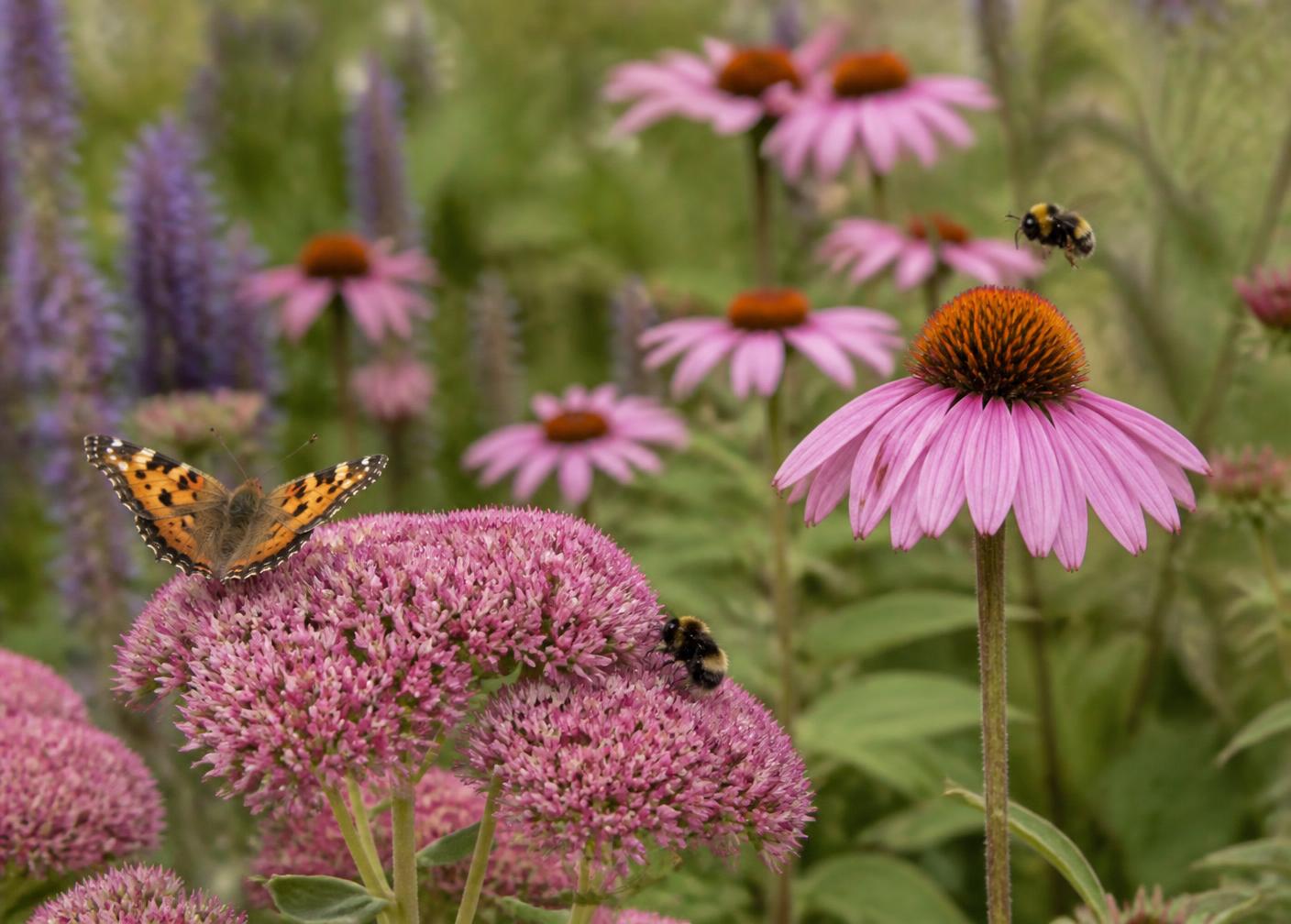
Which is where the wildlife comes in. A garden shared with goldfinches and bumblebees and a hedgehog under the shed is a different proposition from a garden kept only for looking at. Leaving a corner long, planting single-flowered varieties, keeping a shallow dish of water, tolerating a little mess through winter — none of it costs anything, and each visitor is a small daily event that arrives without being asked.
Nine
Moving gently, outdoors
Gardening is unglamorous exercise and rather good exercise. Digging, carrying, pruning and raking use the whole body at moderate intensity, in short varied bouts, with natural pauses. UK physical activity guidance counts heavy gardening among moderate activity, and it is among the few forms that people continue happily into later life because it does not feel like exercise at all.
It should still be done kindly. Warm up on something light, alternate tasks rather than spending two hours in one position, kneel rather than stoop, and stop before your back tells you to. The aim is to be gardening in twenty years' time, not to finish the border today.
Ten
A peaceful space, whatever the size
None of this requires an acre. The qualities that make a place restorative are mostly about arrangement and attention, and they scale down without much loss.
A seat that faces away from the house. Something scented within arm's reach of it. A single small tree, or a shrub big enough to move in the wind. Water in any form, even a bowl. One corner left alone for the wildlife. A view that ends in planting rather than in fence. A balcony can hold most of that, and a courtyard can hold all of it.
The instinct to tidy every inch is worth resisting. A garden that is entirely under control gives the eye nothing to rest on and gives you nothing to notice. Leave a little to happen by itself; it is usually the part people love best.
“The qualities that make a place restorative scale down without much loss. Size is not the variable that matters.”
Before you go
Continue Your Time in Nature
Reading about birdsong is not the same as hearing it. The Bon Gardening Soundscapes collection is a small, carefully chosen library of authentic field recordings from gardens, woodland and open countryside — the dawn chorus, rain on leaves, bees working lavender, a blackbird at dusk.
Nothing is layered, looped artificially or sweetened with music. Every recording is credited to the person who made it. Put one on while you work, or take ten minutes and simply listen — a few moments of nature, wherever you happen to be.
Written by Thomas Huber for Bon Gardening. This article is a general summary of published research and is not medical advice. If you are struggling with your mental health, please speak to your GP.