Field Guide No. 08
Plants for Shade
Beautiful plants for cooler, shadier places
Shade gardens can be lush, calm and full of life. The right plants will thrive where the sun doesn't reach — under trees, along north-facing walls and in the sheltered corners most gardens have.
A quiet read — around 8 minutes.
Why it matters
- Shade gardens stay cooler and moister in summer, a growing advantage in dry East Anglian years.
- The right plants thrive and need far less watering than sun-lovers pushed into the wrong place.
- Shade supports wildlife with shelter, nectar and pollen — hellebores feed early bumblebees.
- Shady corners create calm, peaceful spaces to sit in and enjoy.
Know your shade
Not all shade is the same, and the difference decides your plant list.
Dappled shade
Light filtered through a deciduous canopy. The easiest and most productive shade — most woodlanders are adapted to exactly this.
Partial shade
Three to six hours of direct sun, often morning sun and afternoon shade. Suits a wide range of perennials.
Deep shade
Little or no direct sun — north walls, under evergreens, narrow side returns. Choose tough, tolerant foliage plants.
Dry shade
The hardest: under mature trees and hedges, where roots take both light and water.
TipPlant small in autumn, water through the first two summers and mulch generously every year.
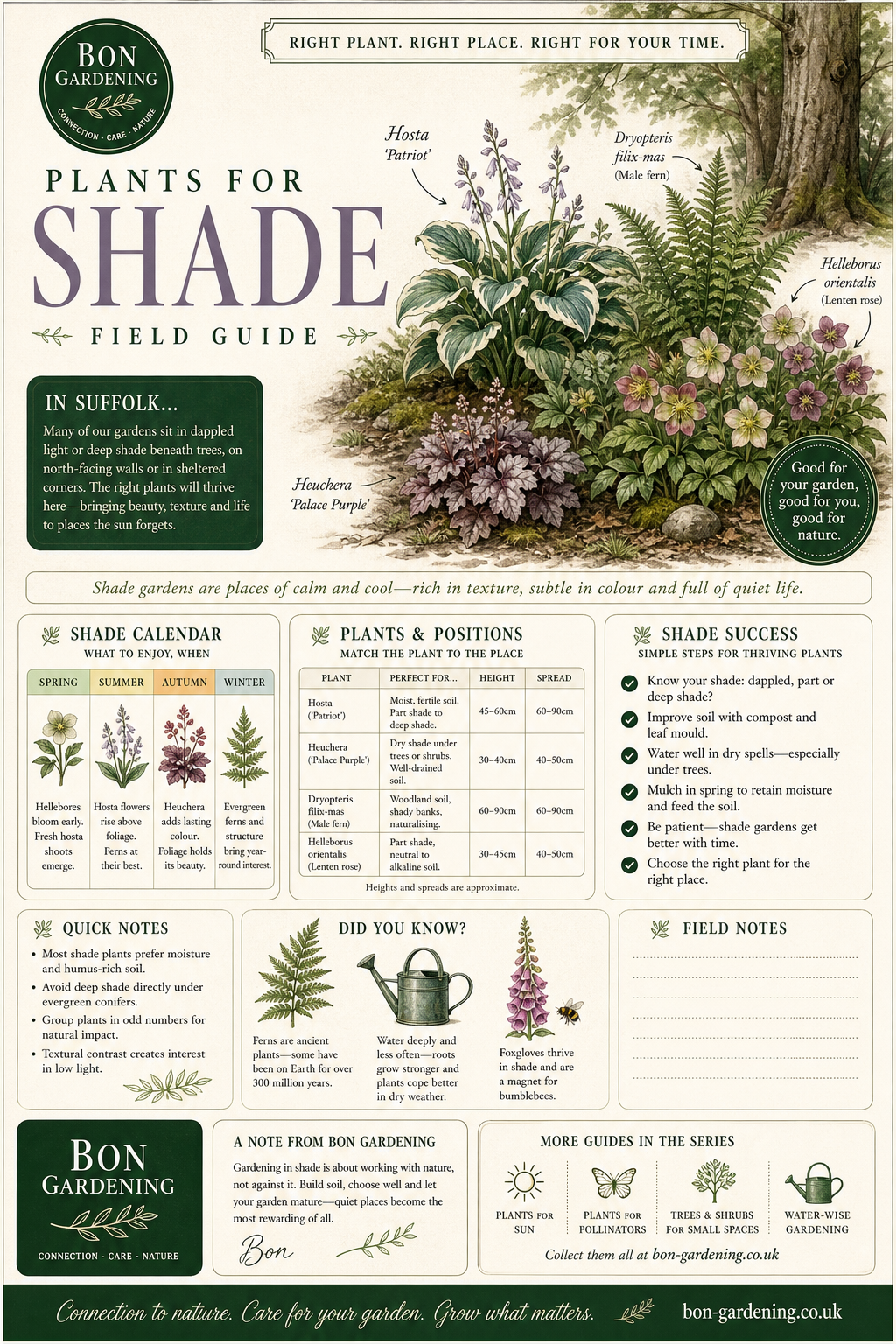
The shade calendar
Year-round interest in the shade.
Early spring — February to April
Helleborus, snowdrops, Brunnera, pulmonaria and wood anemone. The richest moment of the shade year, before the canopy closes.
Late spring — April to June
Hostas, Aquilegia, Geranium phaeum, Tiarella and Dicentra (Lamprocapnos).
Summer — June to August
Ferns, Heuchera, Astilbe, Polygonatum and Digitalis in the lighter edges.
Autumn — September to November
Asters for part shade, Cyclamen hederifolium and toad lilies (Tricyrtis).
Winter — December to February
Helleborus niger and orientalis, Mahonia, evergreen ferns and Cyclamen coum.
Plants and positions
Perfect plants for shade, with the conditions they actually want.
Hosta (Plantain lily)
Partial to full shade, moist fertile soil. Grown for foliage; flowers July to August.
TipGood partners: ferns, Heuchera, Brunnera. Thicker, blue-leaved cultivars resist slugs best.
Heuchera (Coral bells)
Partial shade, well-drained soil. Foliage year-round, flowers June to August. Dislikes winter wet.
TipGood partners: hostas, ferns, Heucherella. Lift and replant deeper when plants become woody and lean.
Helleborus × hybridus (Lenten rose)
Dappled to full shade, neutral to alkaline soil — well suited to much of Suffolk. Flowers February to April.
TipRemove old leaves in late December to show the flowers and reduce hellebore leaf spot.
Dryopteris filix-mas (Male fern)
Full to dappled shade, tolerates dry shade once established. Semi-evergreen, reliable and long-lived.
TipGood partners: hostas, Tiarella, Brunnera. Cut back tired fronds in early spring.
Astilbe
Partial shade with reliably moist soil. Flowers June to August, seed heads stand into winter.
TipAstilbe will not tolerate dry ground — reserve it for the damper part of the garden.
Brunnera macrophylla
Partial to full shade, moist soil. Sprays of blue flowers April to May over good foliage.
TipSilver-leaved cultivars lift a dark corner more than any flower will.
How to grow in shade
- Improve soil with compost and leaf mould before planting — shade soil is usually hungry and dry.
- Mulch to retain moisture and suppress weeds, keeping mulch off plant crowns.
- Choose the right plant for the light level rather than hoping something will adapt.
- Water well in dry spells, especially under trees and along house walls in the rain shadow.
- Be patient — shade gardens build slowly, then look better every year.
- Layer your planting: taller ferns and shrubs at the back, groundcover at the front.
Quick notes
- North-facing borders get the most consistent, even shade — often easier than shifting dappled light.
- Morning sun with afternoon shade suits many plants that dislike full exposure.
- Evergreen structure gives year-round interest where flowers are fewer.
- Avoid planting directly beneath evergreen conifers; almost nothing succeeds there.
- Textural contrast — broad hosta leaves against fine fern fronds — does the work colour does in sun.
Did you know?
Many woodland plants flower early precisely because they must complete most of their growing before the tree canopy closes over them in late spring.
Ferns are ancient — the group predates flowering plants by a very long stretch of geological time, which is part of why they cope with such low light.
Shade brings calm and beauty — with the right plants, it can be just as vibrant as bright, sunny spots.
Bon Gardening Field Guides are written with Suffolk gardens in mind. Every garden is different, so these guides offer practical principles rather than fixed rules.