Field Guide No. 05
Guide to Composting
Turn today's scraps into tomorrow's soil
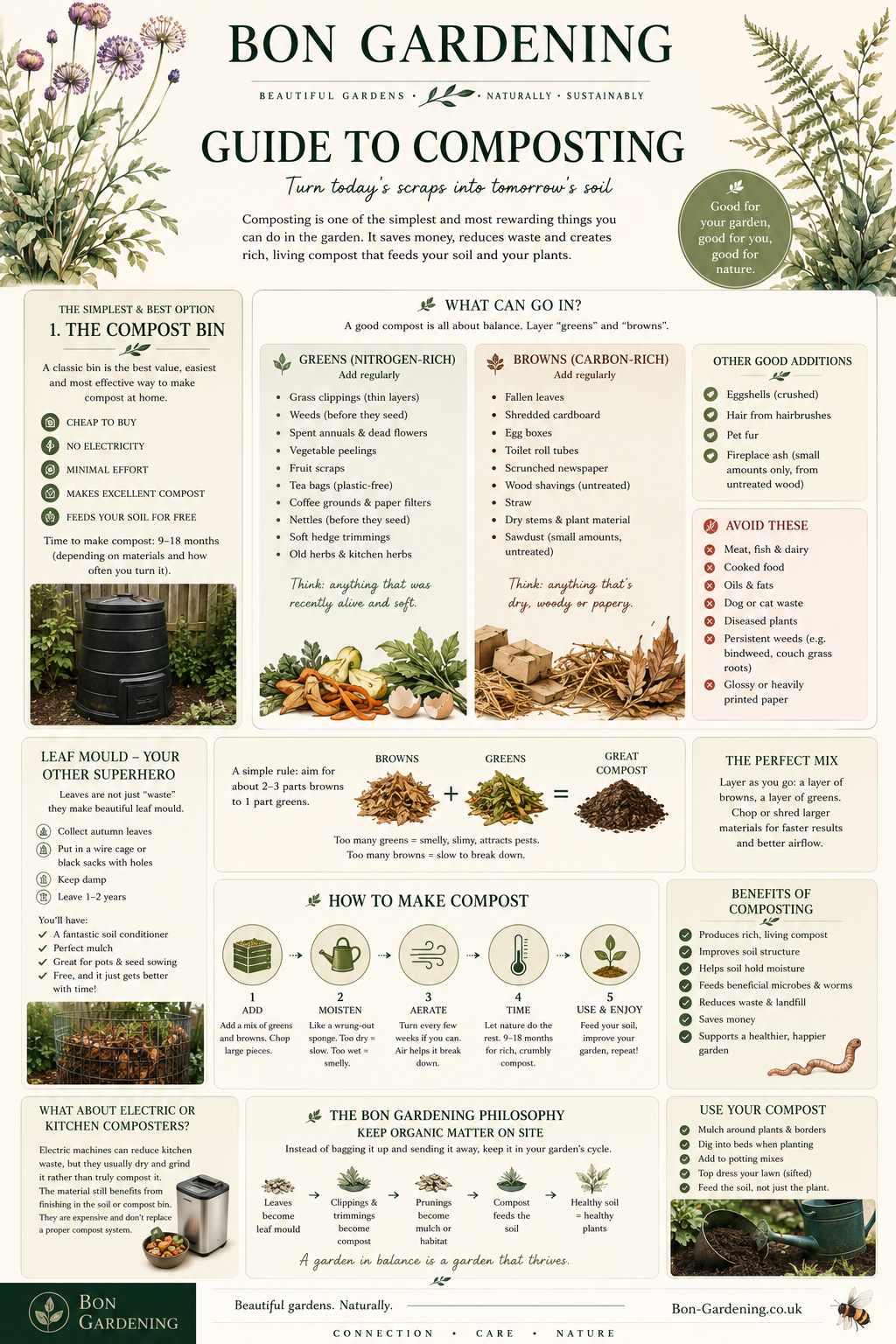
Composting is one of the simplest and most rewarding things you can do in the garden. It saves money, reduces waste and creates rich, living compost that feeds your soil and your plants.
A quiet read — around 8 minutes.
The simplest, best option — the compost bin
A classic bin is the best value, easiest and most effective way to make compost at home. Cheap to buy, no electricity, minimal effort — and it feeds your soil for free.
Time to make compost: 9–18 months depending on materials and how often you turn it.
What can go in?
A good compost is all about balance. Layer 'greens' and 'browns'.
Greens (nitrogen-rich)
Grass clippings (thin layers), weeds (before they seed), spent annuals & dead flowers, vegetable peelings, fruit scraps, tea bags (plastic-free), coffee grounds & paper filters, nettles (before they seed), soft hedge trimmings, old herbs. Think: anything that was recently alive and soft.
Browns (carbon-rich)
Fallen leaves, shredded cardboard, egg boxes, toilet roll tubes, scrunched newspaper, wood shavings (untreated), straw, dry stems & plant material, sawdust (small amounts, untreated). Think: anything dry, woody or papery.
Other good additions
Eggshells (crushed), hair from hairbrushes, pet fur and small amounts of fireplace ash from untreated wood.
Avoid these
- Meat, fish & dairy
- Cooked food
- Oils & fats
- Dog or cat waste
- Diseased plants
- Persistent weeds (e.g. bindweed, couch grass roots)
- Glossy or heavily printed paper
The perfect mix
A simple rule: aim for about 2–3 parts browns to 1 part greens.
Too many greens = smelly, slimy, attracts pests. Too many browns = slow to break down.
Layer as you go: a layer of browns, a layer of greens. Chop or shred larger materials for faster results and better airflow.
How to make compost
1. Add
Add a mix of greens and browns. Chop large pieces.
2. Moisten
Like a wrung-out sponge. Too dry = slow. Too wet = smelly.
3. Aerate
Turn every few weeks if you can. Air helps it break down.
4. Time
Let nature do the rest. 9–18 months for rich, crumbly compost.
5. Use & enjoy
Feed your soil, improve your garden, repeat.
Leaf mould — your other superhero
Leaves aren't just 'waste' — they make beautiful leaf mould. Collect autumn leaves, put them in a wire cage or black sacks with holes, keep damp and leave for one to two years.
You'll have a fantastic soil conditioner, perfect mulch and a great addition for pots and seed sowing. Free — and it just gets better with time.
The Bon Gardening philosophy
Keep organic matter on site. Instead of bagging it up and sending it away, keep it in your garden's cycle.
Leaves become leaf mould. Clippings & trimmings become compost. Prunings become mulch or habitat. Compost feeds the soil. Healthy soil = healthy plants.
Use your compost
- Mulch around plants & borders
- Dig into beds when planting
- Add to potting mixes
- Top dress your lawn (sifted)
- Feed the soil, not just the plant.
A garden in balance is a garden that thrives.
Bon Gardening Field Guides are written with Suffolk gardens in mind. Every garden is different, so these guides offer practical principles rather than fixed rules.